

Choose the ecommerce platform that matches how your business works, then make the website look good. Never the other way round.
An ecommerce platform for business is the software a company uses to sell online and to run everything behind the sale: the store and app, payments, orders, stock, delivery and customer data. A website builder gives you a shop window. A platform runs the shop.
The difference shows up fast. A pharmacy with three branches in Lucknow sets up a good-looking website in a week. Then the first orders arrive. Which branch has the medicine in stock? Which of its own riders is closest? How does the owner see orders from all three branches in one place? None of that is a design problem, and a template cannot answer it. That is the job of the platform underneath.
This guide covers what an ecommerce platform for business should include, which kind fits which business model, how platforms charge, and the questions to ask before you choose.
What an ecommerce platform for business includes
A good platform covers six areas. A plain ecommerce website builder usually covers the first and leaves the rest to plugins.
A storefront on the web and, ideally, your own mobile app.
A catalogue and stock that stay in sync across warehouses, branches or sellers.
Orders and payments, with the methods your buyers use and proper tax invoices.
Delivery, whether through courier partners, your own riders or both.
Customers and marketing, including WhatsApp messages and ad tracking.
An admin panel with reports, staff roles and permissions.
When all six read from the same data, stock is right, orders are not copied between tools, and you can see the whole business in one place.
Match the platform to your business model
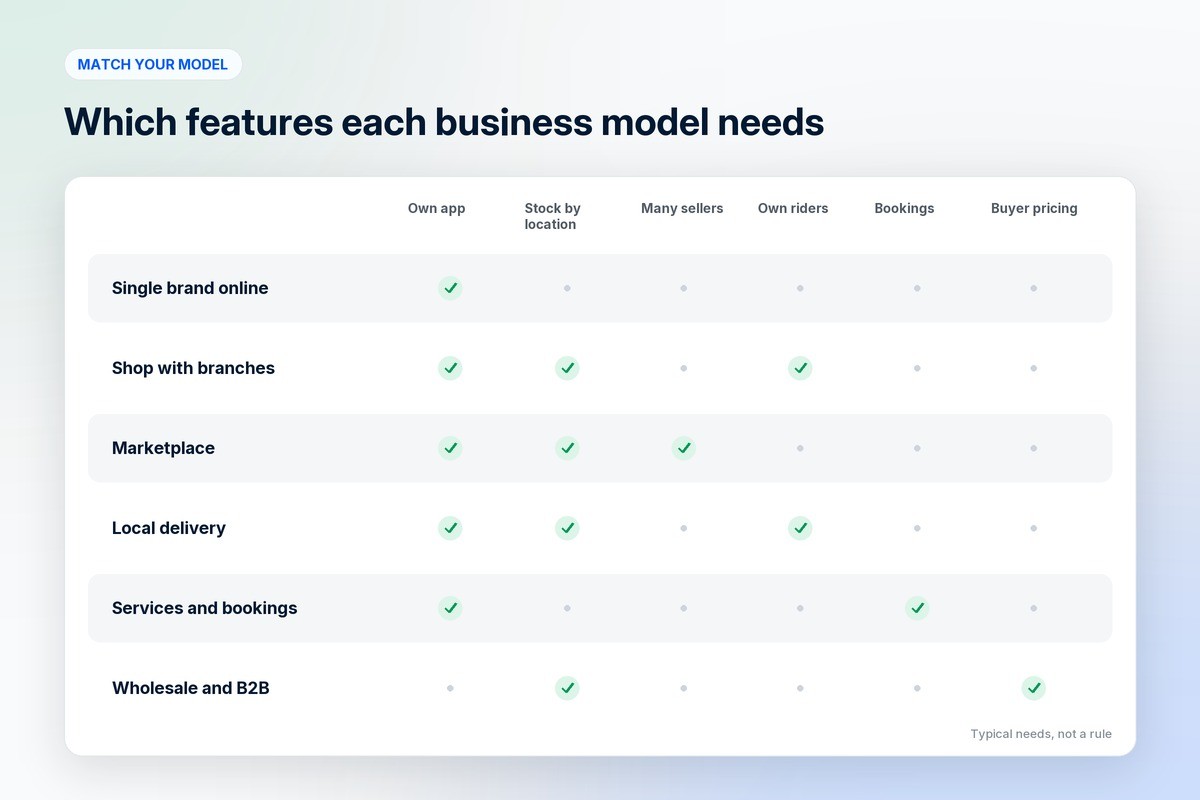
The right ecommerce platform for business depends far more on how you sell than on what you sell.
A single brand selling online
A brand that makes or sources its own products and sells direct needs a strong storefront, a branded app once repeat buyers grow, and marketing built in. If this is you, our guide to what D2C means covers the model in detail.
A shop with branches or warehouses
Retailers going online need stock per location, orders routed to the right branch, and buyers shown what is available near them. Check that the platform handles several warehouses or stores natively, without a separate inventory tool.
A marketplace with many sellers
If other sellers will list on your platform, you need a multi vendor marketplace: seller sign-up, per-seller products and pricing, commission or fee rules, and split payouts. A multi vendor ecommerce platform has these built in. Bolting them onto a single-store builder is where many marketplace launches stall.
A local delivery business
Grocers, pharmacies, bakeries and restaurants that deliver with their own riders need a delivery app, rider assignment within a set distance, and live tracking for the buyer. Without them, deliveries get organised by phone call and WhatsApp group.
A service business that takes bookings
Salons, repair services, tutors and anyone selling time need bookings and time slots, ideally alongside instant orders. Many product-first platforms need a separate booking app for this, with its own data.
A wholesale or B2B business
Selling to other businesses means different prices for different buyers and tax invoices that match the rules where you sell, usually on large repeat orders. Check that the platform supports buyer-specific or seller-specific pricing before you commit.
What to look for in an ecommerce platform for business
Every platform demo shows the storefront. When you compare an ecommerce platform for business, these are the parts that decide how it runs day to day:

Staff roles, so a packer, a branch manager and an accountant each see only what they need.
Stock that updates everywhere the moment an order is placed.
Local payment methods and automatic invoices with the right tax.
Delivery tracking the buyer can follow without calling you.
Your own branded app, rather than a listing inside someone else’s.
WhatsApp updates and ad tracking, so you know which campaign produced which order.
Full data export, so nothing about your business is locked in.
How ecommerce platforms charge
Prices are hard to compare because platforms charge in different ways, often several at once:
A monthly or yearly plan.
A commission or transaction fee on every order.
Per-seat or per-seller charges as the team or the marketplace grows.
Paid apps and plugins for features the platform does not include.
Setup and custom development.
The one to watch is the percentage. A commission looks small when sales are small and grows with every order, while a flat plan stays the same. Work out what each model costs at the sales you expect in a year, not the sales you have today.

Questions to ask before you choose an ecommerce platform for business
Which business model is the platform built for, and does it match yours?
What will it cost at three times your current orders, including every fee and app?
Do you get your own branded app, and on which plan?
Can it handle more locations, more sellers or your own delivery when you need them?
Who owns the customer data, and how do you export it?
What support do you get, and how fast does a person answer?
Moving from your current setup
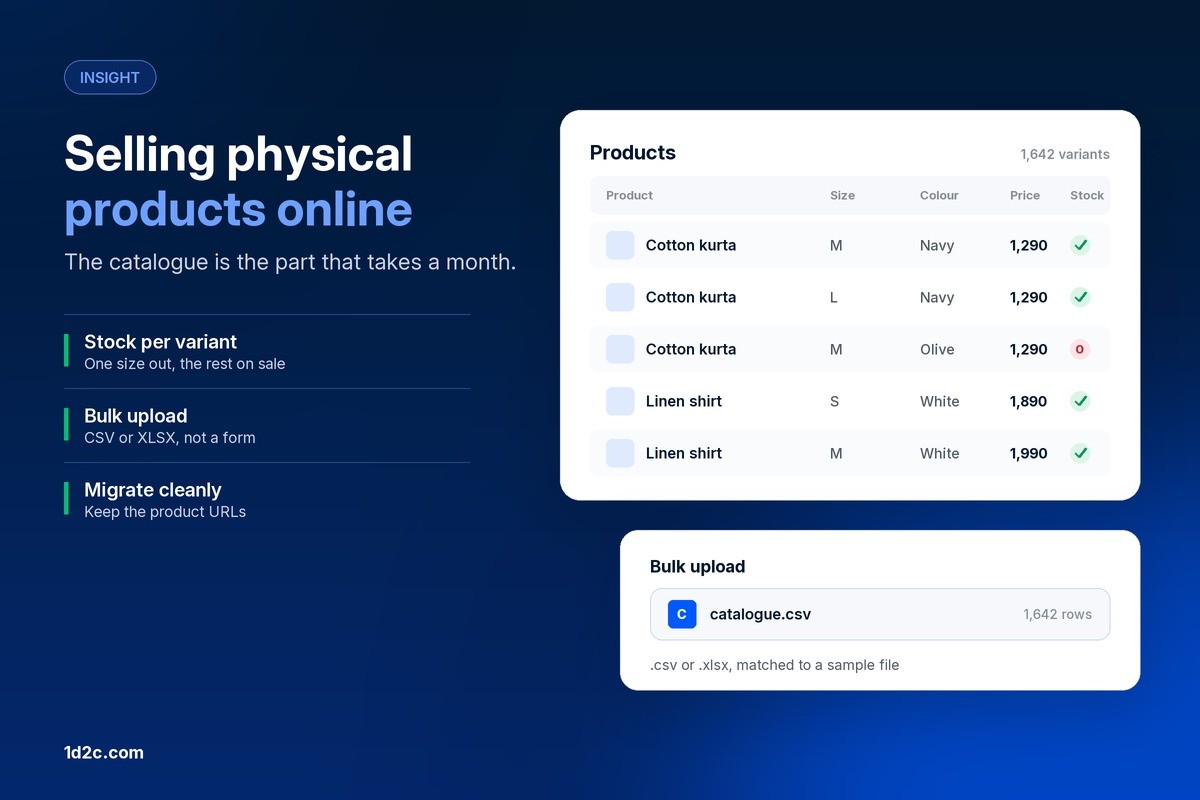
Switching platforms is less painful than most owners expect, as long as you plan it. Export your products, customers and order history first. Keep your domain, and redirect old product links to the new ones so search traffic follows you. Run the new store alongside the old one for a short while, check a few real orders end to end, then move fully.
How 1D2C fits
1D2C is an all in one ecommerce platform for business, built as a white label ecommerce platform: your website, your own branded buyer app, and seller and delivery apps, all under your name. Single Vendor plans are sized by warehouses and Marketplace plans by vendors, so you pay for the size of your operation instead of a cut of your sales. A store can run in product mode or service mode, with scheduled bookings and instant orders, and riders are assigned within a distance you set. No commission is taken on any order, on any plan. Plans are on the pricing page.
Frequently asked questions
What is an ecommerce platform for business?
Software that lets a business sell online and run the operation behind it: storefront and app, catalogue and stock, orders and payments, delivery, customer data and reports, all in one system.
Why does a business need an ecommerce platform rather than just a website?
A website takes orders. A platform also handles stock across locations, delivery, staff roles, invoices and customer data, which is the work that grows with every order.
How do I choose an ecommerce platform for my business?
Start from your business model: single brand, branches, marketplace, local delivery, bookings or B2B. Then compare what each platform costs at the size you expect in a year, check that you get your own app, and make sure you can export your data.
Which ecommerce platform for business is best for a small company?
The one built for how you sell. A small brand selling only online needs something simpler than a shop with branches and its own riders. Choose for the next year or two, not just for launch day.
Who needs a multi vendor ecommerce platform?
Anyone letting other sellers list products on their site: marketplaces, franchise networks, local aggregators and brands that host partner products. It needs seller onboarding, per-seller pricing and split payouts built in.
When should a business change its ecommerce platform?
When you are paying for more apps and fees than the plan itself, when stock or orders keep falling out of sync, or when the platform cannot give you something you now need, such as an app, more sellers or your own delivery.
How much does an ecommerce platform cost?
It depends on the model: a plan, a commission per order, per-seat charges, paid apps and setup work. Compare the total at the sales you expect in a year, because a percentage fee grows with every order.
Where to go from here
If you are still choosing between builders, read our guide to the ecommerce website builder options. For the case for running buyer, seller and delivery apps together, see why your business needs buyer, seller and delivery apps. And when you are ready to compare plans, they are on the pricing page.