

The most profitable ecommerce business ideas are rarely the cleverest. They are the ones people buy again, that ship easily and that you can explain better than anyone else.
The best ecommerce business ideas share three things: people buy the product again, it ships cheaply and safely, and you can explain why yours is better. Below are 21 ecommerce business ideas with room for healthy margins, grouped by category, with what makes each one work and what to watch out for.
No idea on this list is profitable by itself. A candle business can make good money or lose it on broken jars and expensive ads. What changes the result is the choice of niche, the price, the packaging and how well you bring buyers back. Treat the list as a starting point, then use the scorecard further down to test the idea that fits you.
What makes an ecommerce business idea profitable
Before the list, here is what we looked for in every idea:
Repeat purchase, so you are not paying to find a new customer for every order.
Light, compact products that do not turn shipping into your biggest cost.
A price set by value, design or story rather than by the cost of materials.
A clear buyer you can describe in a sentence and find online.
Something you can do better than the sellers already there.
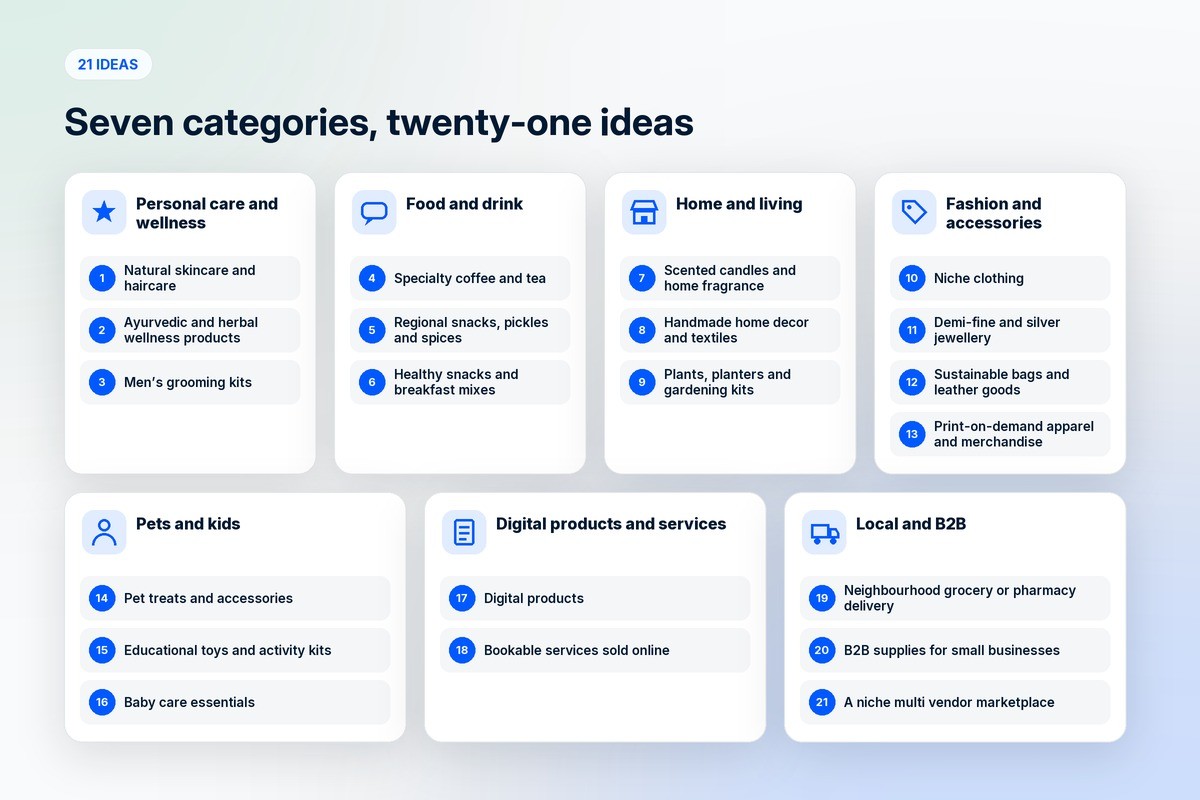
21 ecommerce business ideas by category
The ideas are grouped into seven categories, from personal care to local delivery. Each one says why it can work and what to watch out for.
Personal care and wellness
1. Natural skincare and haircare
Small, light products that people reorder every month or two, and a category where ingredients and before-and-after stories sell. A focused range for one skin or hair problem beats a full catalogue.
Watch out for: cosmetics have labelling and licensing rules in most countries, so check yours before you sell.
2. Ayurvedic and herbal wellness products
Teas, oils, powders and supplements built on traditional recipes have loyal buyers and strong repeat purchase, at home and among people of Indian origin abroad.
Watch out for: health claims are tightly regulated. Describe ingredients and use honestly, and avoid promising cures.
3. Men’s grooming kits
Beard oils, face washes and shaving kits sell well as bundles and gift sets, and a refill subscription turns one order into many.
Watch out for: a crowded category, so your angle (skin type, price point, or a sharper brand) has to be clear.
Food and drink
4. Specialty coffee and tea
Single-origin coffee, estate teas and blends are bought every few weeks, fit in a letterbox-sized pack, and suit subscriptions well.
Watch out for: freshness and roast dates matter, so order small and often instead of holding months of stock.
5. Regional snacks, pickles and spices
Homemade masalas and pickles travel far: to people who moved away from home and miss the taste. Small batches and a family story make them easy to market.
Watch out for: food businesses need registration, such as FSSAI in India, and packaging that survives a courier.
6. Healthy snacks and breakfast mixes
Millet snacks, granola, nut butters and high-protein mixes appeal to buyers who read labels and buy again when they find something they like.
Watch out for: shelf life and taste testing. Sample with real buyers before you print packaging.
Home and living
7. Scented candles and home fragrance
Low material cost against a price set by the scent, the jar and the brand. Candles and diffusers are also popular gifts, which lifts sales around festivals.
Watch out for: wax and glass are heavy and fragile, so test your packaging before you set shipping prices.
8. Handmade home decor and textiles
Block-printed cushion covers, table linen, macramé and pottery carry the price of something made by hand, and photograph beautifully on Instagram.
Watch out for: making enough to meet demand. Work out your weekly capacity before you advertise.
9. Plants, planters and gardening kits
Indoor plants, self-watering pots and starter kits for balconies sell well to city buyers, with repeat orders for soil and seeds.
Watch out for: live plants need careful delivery. Many sellers start with planters and kits and add plants for local orders only.
Fashion and accessories
10. Niche clothing
Instead of competing with every fashion brand, serve one buyer well: office wear, modest wear, plus sizes, maternity or a regional craft. A clear niche makes the product, the photos and the ads easier.
Watch out for: returns for size and fit, so publish a detailed size chart and real measurements.
11. Demi-fine and silver jewellery
Small and easy to ship, with a perceived value well above the material cost when the design and the packaging are good.
Watch out for: photography has to be excellent, because buyers cannot hold the piece. Shoot on skin, not only on white.
12. Sustainable bags and leather goods
Bags made from recycled, vegan or responsibly sourced materials carry a story people pay for and share.
Watch out for: back up every sustainability claim with specifics, or buyers and regulators will question it.
13. Print-on-demand apparel and merchandise
T-shirts, mugs and posters printed only after someone orders them. No stock to hold, and you can test many designs cheaply.
Watch out for: lower margins and less control over quality and delivery times, so order samples from your print partner.
Pets and kids
14. Pet treats and accessories
Pet owners buy food and treats on a schedule and spend generously on their animals. Natural treats, grooming products and personalised accessories all work well online.
Watch out for: pet food is regulated in many places. Start with accessories if you are unsure.
15. Educational toys and activity kits
Parents look for screen-free activities, and monthly activity boxes by age group turn into subscriptions.
Watch out for: toy safety standards. Use certified materials and say so clearly.
16. Baby care essentials
Parents reorder baby care products often and stay loyal to brands they trust, which rewards a careful, honest brand.
Watch out for: safety and ingredient rules are strict. Trust is everything in this category, so never cut corners.
Digital products and services
17. Digital products: templates, courses and presets
Planners, design templates, recipe ebooks, photo presets and short courses cost nothing to ship and can be sold again and again. The margin is close to the full price.
Watch out for: you still need an audience. These sell best when you already have followers who trust your expertise.
18. Bookable services sold online
Salons, home cleaning, repairs, tutors and consultants can sell time slots online, take payment upfront and send reminders, the same way a store sells products.
Watch out for: no-shows and rescheduling. Clear cancellation rules and automatic reminders solve most of it.
Local and B2B
19. Neighbourhood grocery or pharmacy delivery
A shop that already has stock and loyal customers can take orders online and deliver with its own riders within a few kilometres. Repeat orders are built in.
Watch out for: fast delivery promises are hard to keep, so promise what your riders can do on a busy evening.
20. B2B supplies for small businesses
Packaging, labels, cleaning supplies and raw materials sold to other businesses come with bulk orders and monthly reorders.
Watch out for: credit terms and slower payments. Decide early who gets credit and for how long.
21. A niche multi vendor marketplace
Bring many small sellers of one category together on one platform, such as home bakers in a city or handloom weavers in a region, and earn a fee or commission on their sales.
Watch out for: you are now in the business of recruiting and supporting sellers, which is different work from selling products yourself.
How to choose the right ecommerce business idea
Score each idea you are considering from one to five on these questions, and be honest. The highest total is usually the one to test first.
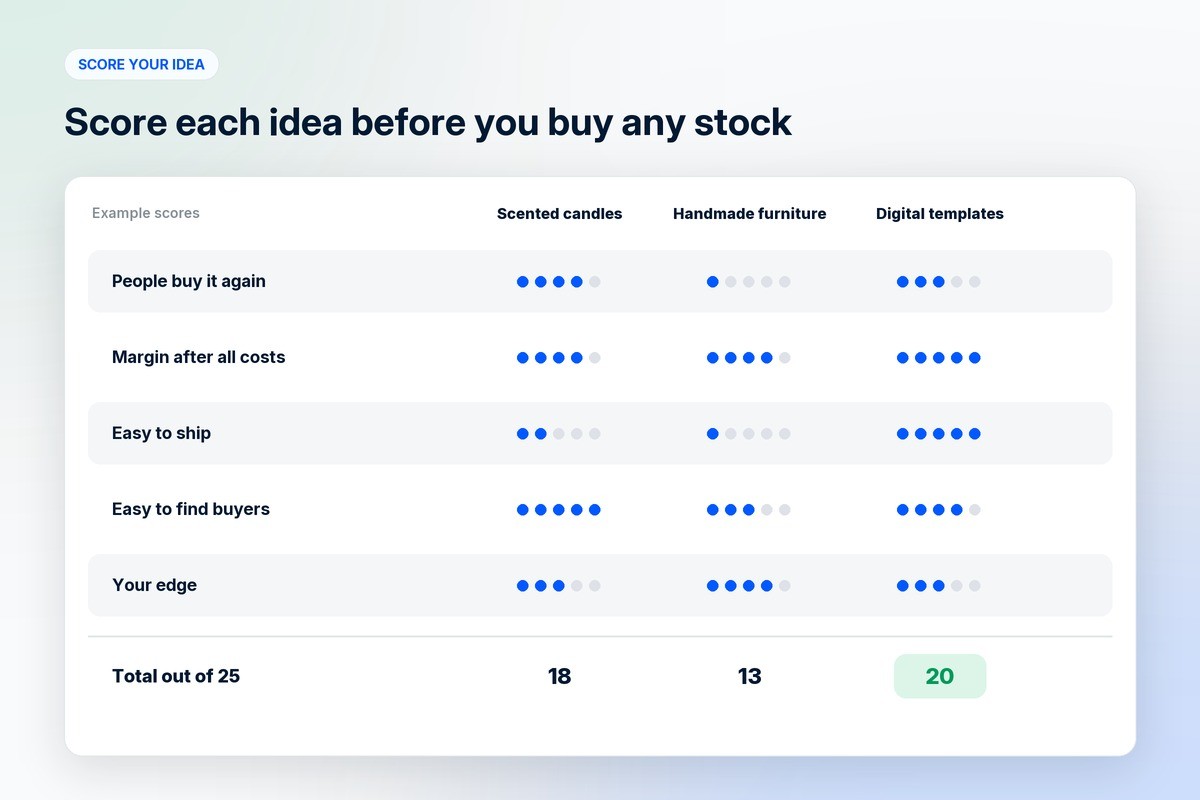
Will people buy it again within a few months?
Is there enough margin left after shipping, payment fees, returns and ads?
Is it easy and cheap to ship without breaking?
Can you describe the buyer and find them on Instagram, Google or WhatsApp?
What do you know, make or source that the current sellers do not?
Then do the unit maths for one order before you buy any stock. Our list of 7 things to do before you start an ecommerce brand walks through it.
How to test an idea before you invest
You can learn most of what you need for very little money:
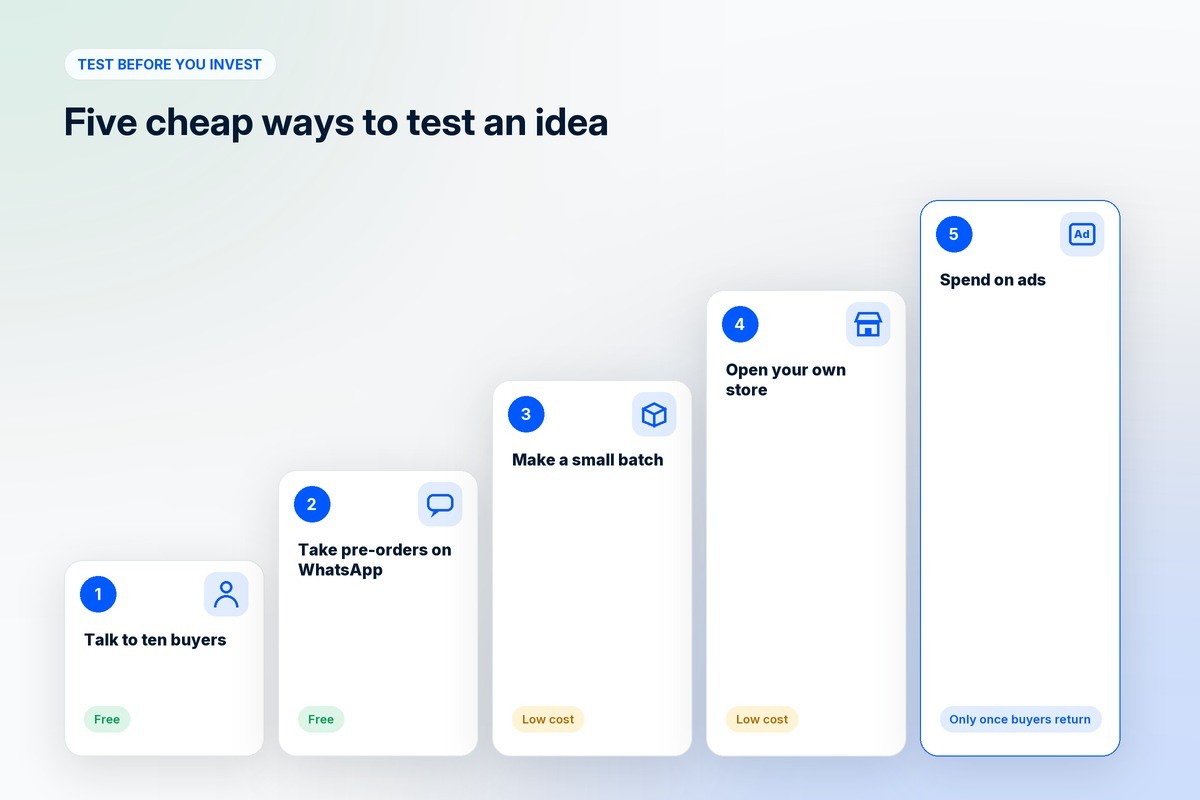
Talk to ten people who match your buyer and ask what they use today and what annoys them about it.
Show photos or samples in a WhatsApp group or on Instagram and take pre-orders.
Make or buy a small first batch, even at a higher cost per unit.
Open your own online store, even with five products, and send the first buyers there.
Spend on ads only once people who bought once are coming back.
How to start your ecommerce business
Once an idea passes those tests, the next steps are the same for every category: choose where to sell, build a store, set up payments and delivery, and start marketing. Our guide to how to sell online covers each step, and the ecommerce platform for business guide helps you pick the right system for your model.
How 1D2C helps
1D2C builds your own website and branded buyer app for any of these ideas. Stores can run in product mode or service mode, so a salon or a tutor can sell bookings the way a brand sells products. Local shops can deliver with their own riders, and marketplace plans support from 20 up to 10,000 vendors for a niche multi vendor marketplace. No commission is taken on any order, on any plan. Plans are on the pricing page.
Frequently asked questions
What is the most profitable ecommerce business?
There is no single answer, because profit depends on your niche and your costs more than on the category. Digital products have the highest margins because nothing ships. Among physical products, repeat-purchase categories such as skincare, coffee and pet food tend to do well over time.
Which ecommerce business ideas need the least money to start?
Digital products, print-on-demand and bookable services need almost no stock. Handmade products and regional food can start small from home. Ideas that need large stock, cold storage or heavy shipping need the most money.
Which ecommerce business idea is best for beginners?
One you already understand: a product you use, a craft you have, or a market you belong to. Knowing the buyer matters more than picking a trendy category.
How do I start an ecommerce business from home?
Pick a product you can make or store at home, test it with pre-orders from people you know, open a small online store, and book courier pickups from your door. Many of the ideas above, from candles to pickles to digital templates, start exactly this way.
Why do some ecommerce business ideas fail?
Usually because the margin does not cover shipping, returns and ads, because too much stock was bought before anyone ordered, or because the brand never gave buyers a reason to come back.
When does an ecommerce business become profitable?
It varies, but most become profitable when repeat buyers start making up a good share of orders, because those sales do not carry the cost of finding a new customer.
Where can I find suppliers for my ecommerce business?
Local manufacturers and wholesale markets, trade fairs, and B2B marketplaces are the usual places. Order samples from several, compare quality and reliability, and start with a small first order.
Where to go from here
If selling direct is new to you, start with what D2C means. When you are ready to set up, our guide to how to sell online takes you through it step by step, and plans are on the pricing page. Once you have picked one, how to sell physical products online covers sourcing and the catalogue.