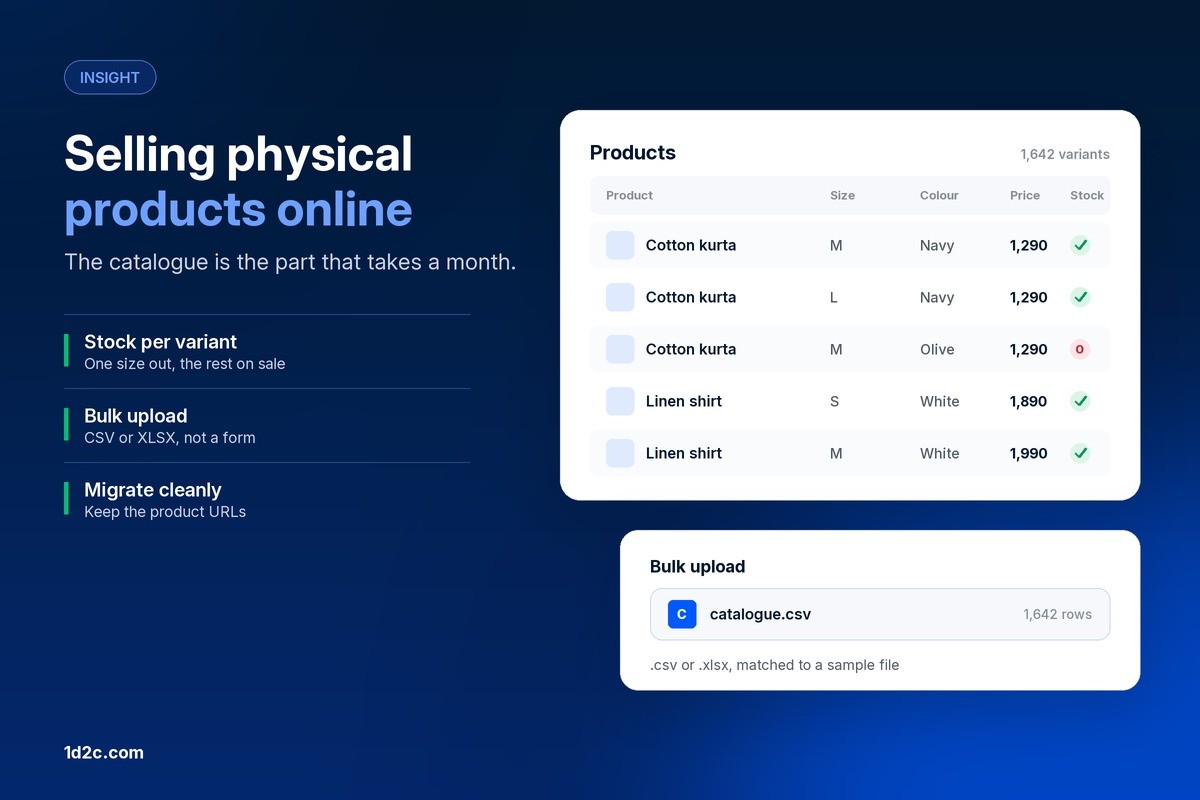


Most ecommerce brands that struggle in their first year had a good product. They skipped the boring work around it.
Before you start an ecommerce brand, you need to know who you are selling to, whether each order makes money, where your stock comes from, what the brand is called, how you will get paid, how parcels will reach people, and where they will buy from you. Get those seven things right and launch day is the easy part.
Here is how it goes wrong. A founder in Pune designs a range of printed tote bags, orders fifteen hundred from a supplier because the per-unit price drops at that quantity, and builds a beautiful Instagram page. The first orders arrive. Then the maths arrives with them: courier charges on a heavy bag, a payment fee on every order, a few returns, and an ad bill bigger than expected. Each sale loses a little money, and there are thirteen hundred bags in the spare room.
None of that was a product problem. All of it could have been worked out on paper first.
1. Know exactly who you are selling to
Write one sentence that describes your buyer and the problem you solve for them. “Working women in their thirties who want office kurtas that survive a washing machine” is a brand. “Everyone who wears clothes” is a catalogue.
Then find out where those people already buy, what they pay, and what annoys them about the options they have. Read reviews of the products you would compete with. The complaints that keep coming up are your opening.
A narrow buyer makes every later decision easier: what to stock, how to price it, what your photos look like and where your ads go.
2. Do the unit maths before you order stock
Every order has to pay for more than the product. Before you commit to a price, add up what one delivered order really costs you:
Making or buying the product, including the packaging it ships in.
Shipping to the buyer, which depends on the parcel’s weight and how far it travels.
Payment gateway fees on prepaid orders.
An allowance for returns, failed deliveries and cash-on-delivery orders that come back.
What it costs in ads to win each order, which is usually the largest number and the one founders guess too low.
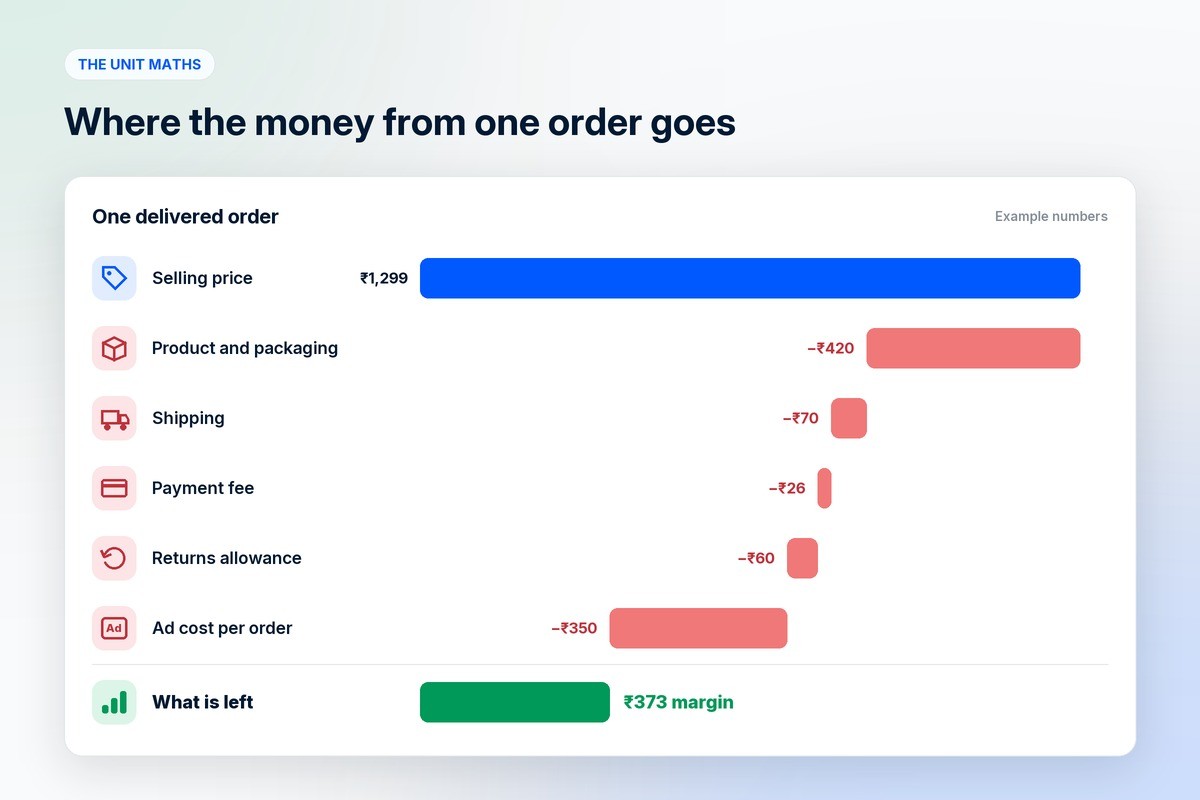
If what is left after all of that is thin, you have three options: raise the price, cut a cost, or sell something people buy again so the ad cost is spread over several orders. Find out now, while it is a spreadsheet and not a room full of stock.
3. Sort out supply before you chase demand
Ecommerce products are only as reliable as the people who make them. Before launch, know your supplier’s minimum order quantity, how long a reorder takes, what happens when a batch arrives with defects, and how much stock you can afford to hold.
Order samples, then a small first batch, even if the unit price is higher. A best-seller that goes out of stock for six weeks costs more than the discount you missed on a bigger order. If you make the product yourself, test how many units you can produce in a busy week, not a quiet one.
4. Choose a name and identity you can live with
Your name will be spoken and searched for years. Check the domain and the trademark before you fall for it, then make sure the social handles you will use are free. Our guide to choosing a brand name covers how.
Next comes a simple identity: a logo that works at small sizes and in one colour, two or three brand colours, and a consistent way of photographing products. You do not need a full brand book on day one. You do need to use the same name, logo and tone everywhere, because that consistency is most of what ecommerce branding is. We wrote about how to create a logo and why branding is important if you want the detail.
5. Get the paperwork and payments in place
The admin is dull and it is also what lets you take money legally. Most new ecommerce businesses need a registered business, any tax registration their country requires (GST in India, VAT in the UK and the EU, sales tax in parts of the US), a business bank account and an approved payment gateway. Gateways ask for documents and can take days to approve, so start early.
Write your store policies before launch, too: returns and refunds, shipping, privacy and terms. Buyers read the returns policy before they pay a brand they do not know. An accountant who works with online sellers is worth an hour of your time at this stage, because the rules differ by country and by product.
6. Plan delivery, packaging and returns
Decide how parcels will reach people before the first order lands. Compare a few courier partners on price and on how they handle returns. Choose packaging that protects the product without adding weight you pay to ship. If your market expects cash on delivery, decide whether to offer it, because it brings more orders and also more parcels that come back unopened.
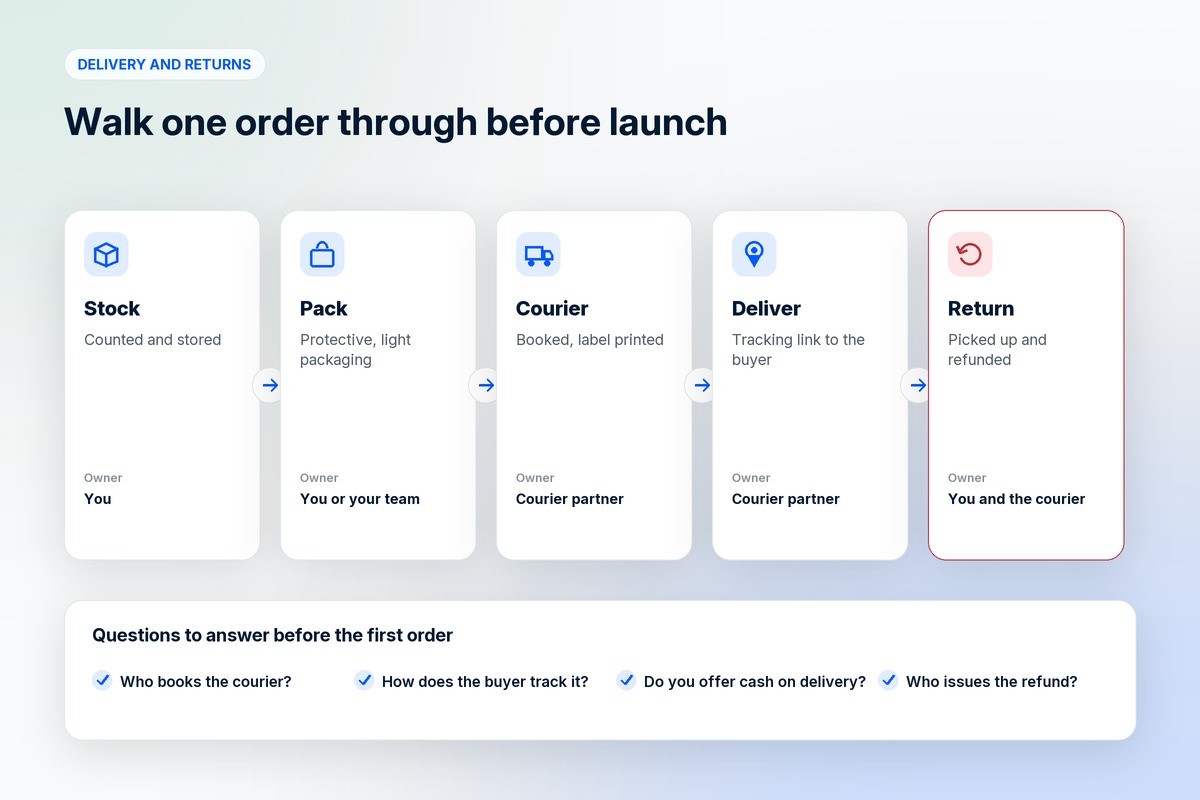
Then walk through one order end to end, including a return. Who packs it, who books the courier, how the buyer gets a tracking link, and who refunds them when it comes back. Every gap you find now is a complaint you will not get later.
7. Build your own store and a launch plan
Marketplaces can bring early sales, but your own website is where you set the price and keep the customer. We explained the risks of selling only on marketplaces in a separate post. Build your own online store with clear photos, delivery dates, the policies above and a checkout that works on a phone. Why an online store is important lists the mistakes to avoid.
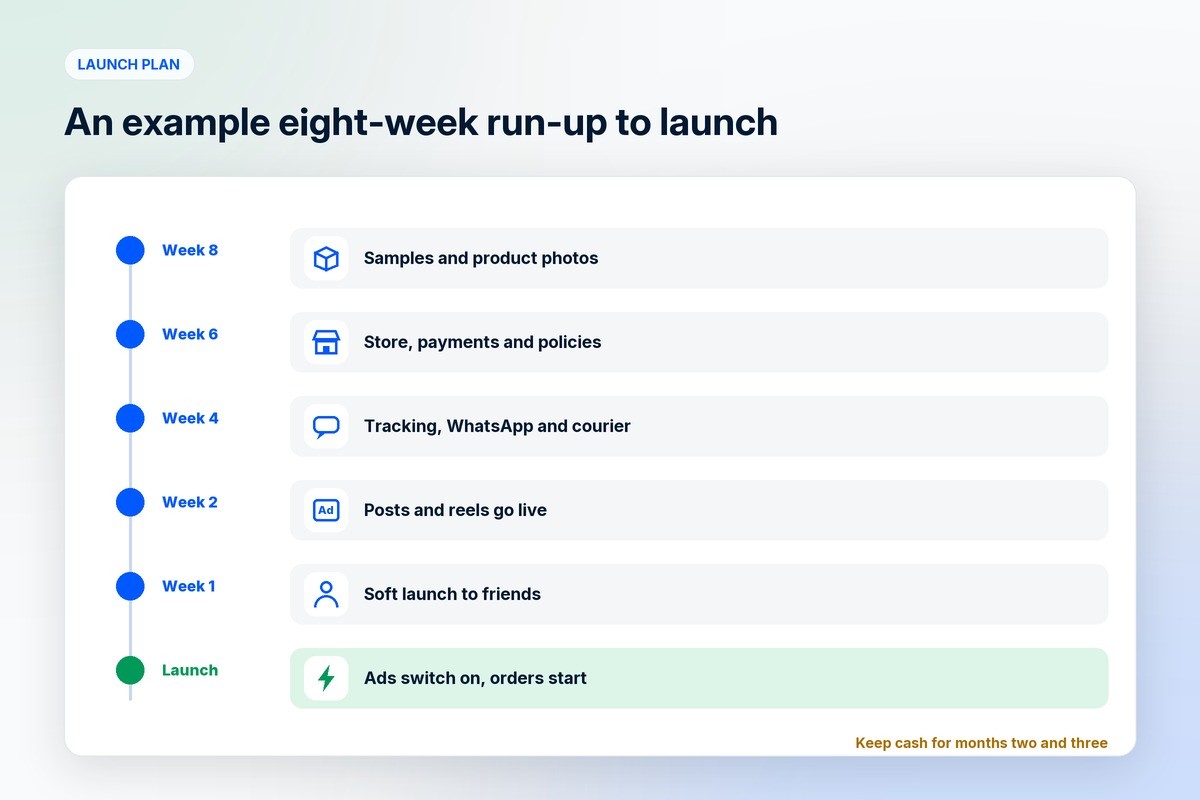
Before launch day, install tracking so you know which posts and ads produce orders, set up WhatsApp for order updates, and post for a few weeks so the brand looks alive when the first visitor arrives. Keep cash back for the second and third month. Ads take time to learn, and the brands that run out of money in month two rarely find out what would have worked in month four.
What usually goes wrong
Ordering a large first batch to get a lower unit price, before anyone has bought the product.
Pricing from the product cost alone and finding out about shipping, returns and ads later.
Falling in love with a name before checking the domain and the trademark.
Spending the whole budget on launch ads and having nothing left to learn from them.
Selling only on one marketplace and never collecting a single customer’s details.
How 1D2C helps
1D2C builds a brand’s own website and buyer app, with seller and delivery apps to run orders behind them, so the store and the deliveries live in one place from the first order. No commission is taken on any order, on any plan. Marketing and WhatsApp plans add a team that runs your posts, reels, ads and WhatsApp campaigns once you are ready to grow. Plans are on the pricing page.
Frequently asked questions
What do I need to start an ecommerce brand?
A clear buyer, a product that makes money after shipping, returns and ads, a reliable supplier, a name you can own, the legal and tax registrations your country requires, a payment gateway, a delivery partner and your own online store.
Why do new ecommerce brands fail?
Most fail on the numbers, not the product: prices that do not cover shipping and ad costs, too much stock ordered too early, or a launch budget spent before the brand learns what sells.
How much money do I need to start an ecommerce business?
Enough for your first batch of stock, your store and registrations, and at least two to three months of marketing. The marketing part is the one founders underestimate, so work out your cost per order before you decide the budget.
How long does it take to launch an ecommerce brand?
Usually a few weeks to a few months, depending on how long samples and payment gateway approval take. Supply is the slowest part for most brands, so start there.
Who should I hire first?
Often nobody. Founders usually do most of the work themselves at first. The first help tends to be packing and support once orders pick up, or someone to run ads once you know your margins can pay for them.
When should I launch my ecommerce store?
When you can take payment, ship reliably and handle a return. A store that launches with a few products done well learns faster than one that waits months for a full catalogue.
Where should a new ecommerce brand sell first?
On its own online store, backed by Instagram and WhatsApp to reach and talk to buyers. Marketplaces can add reach, but your own store is where you keep the customer and the margin.
Where to go from here
If you are still deciding whether to sell direct, start with what D2C means. For the basics of selling online, read what ecommerce is. And if you want the store, the apps and the marketing built as one, plans are on the pricing page. For the whole process, from first product to repeat buyers, see how to sell online in 10 steps.